Exploration in Materials - copper
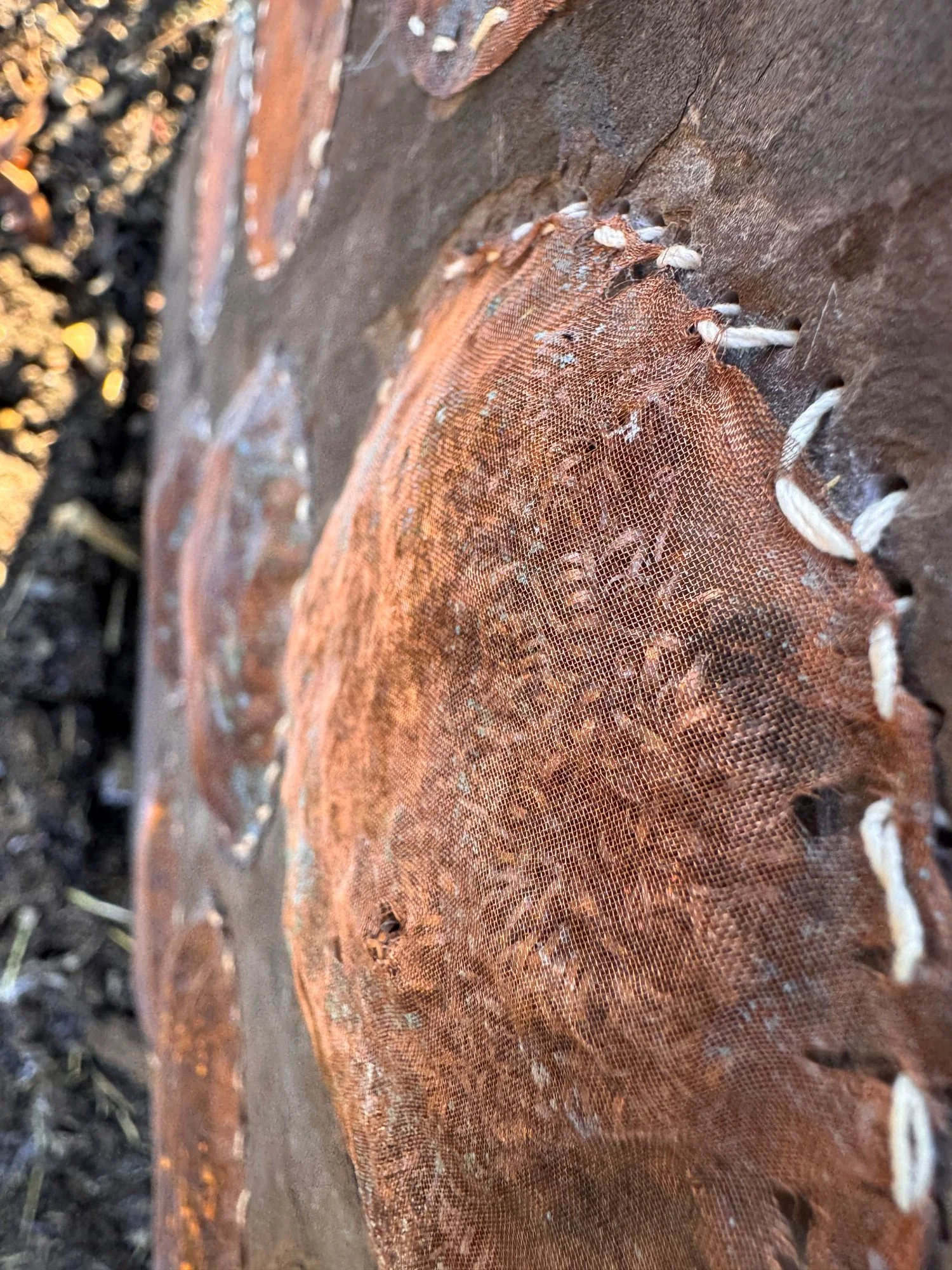
The beauty of copper patination
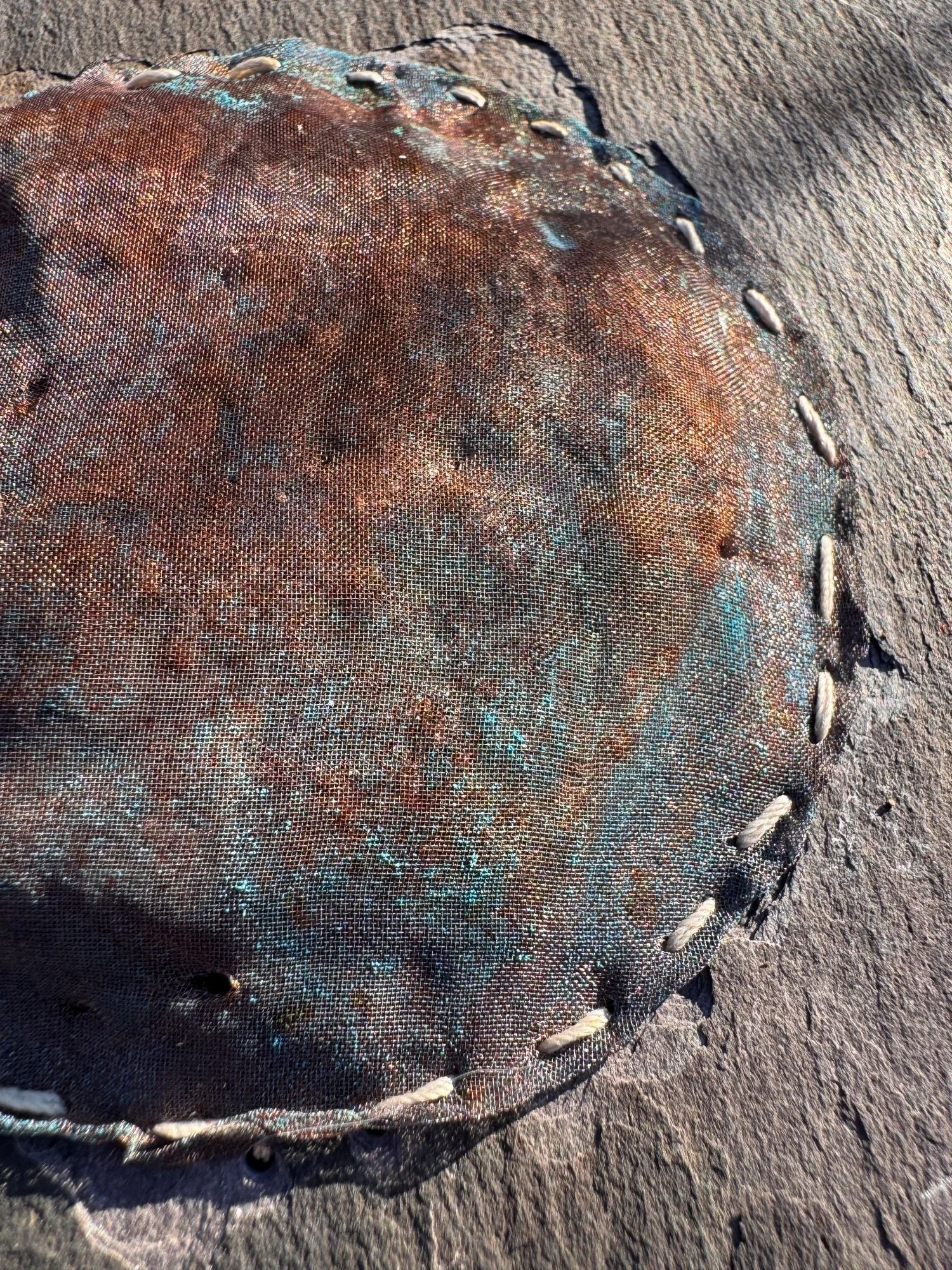
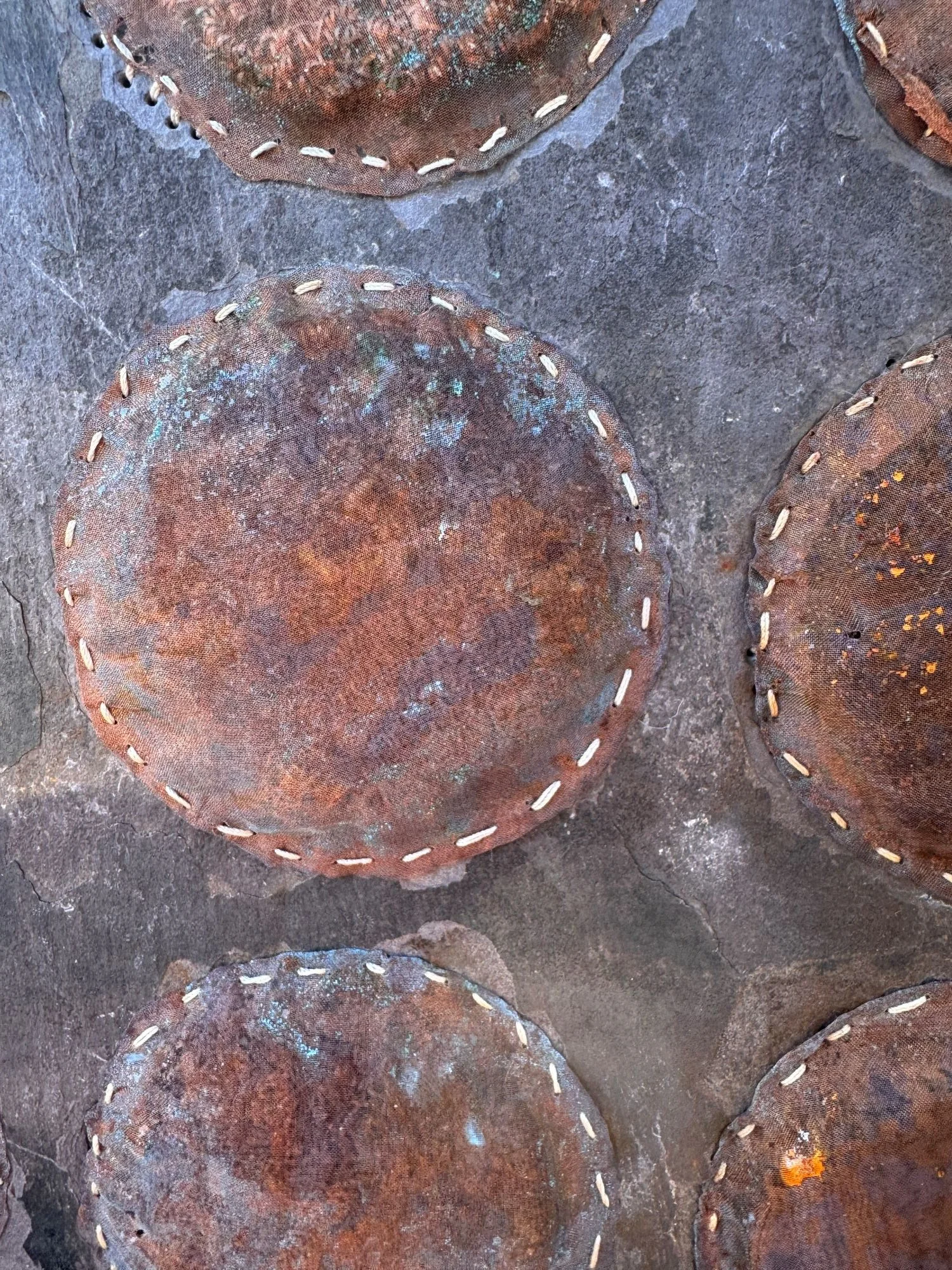
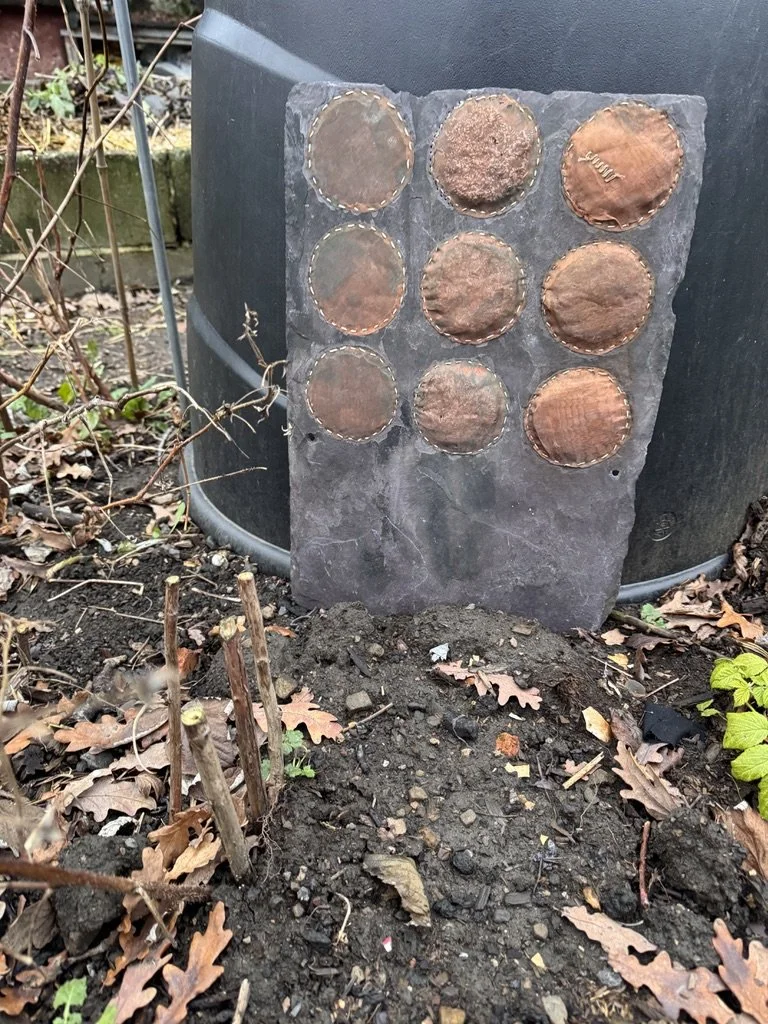
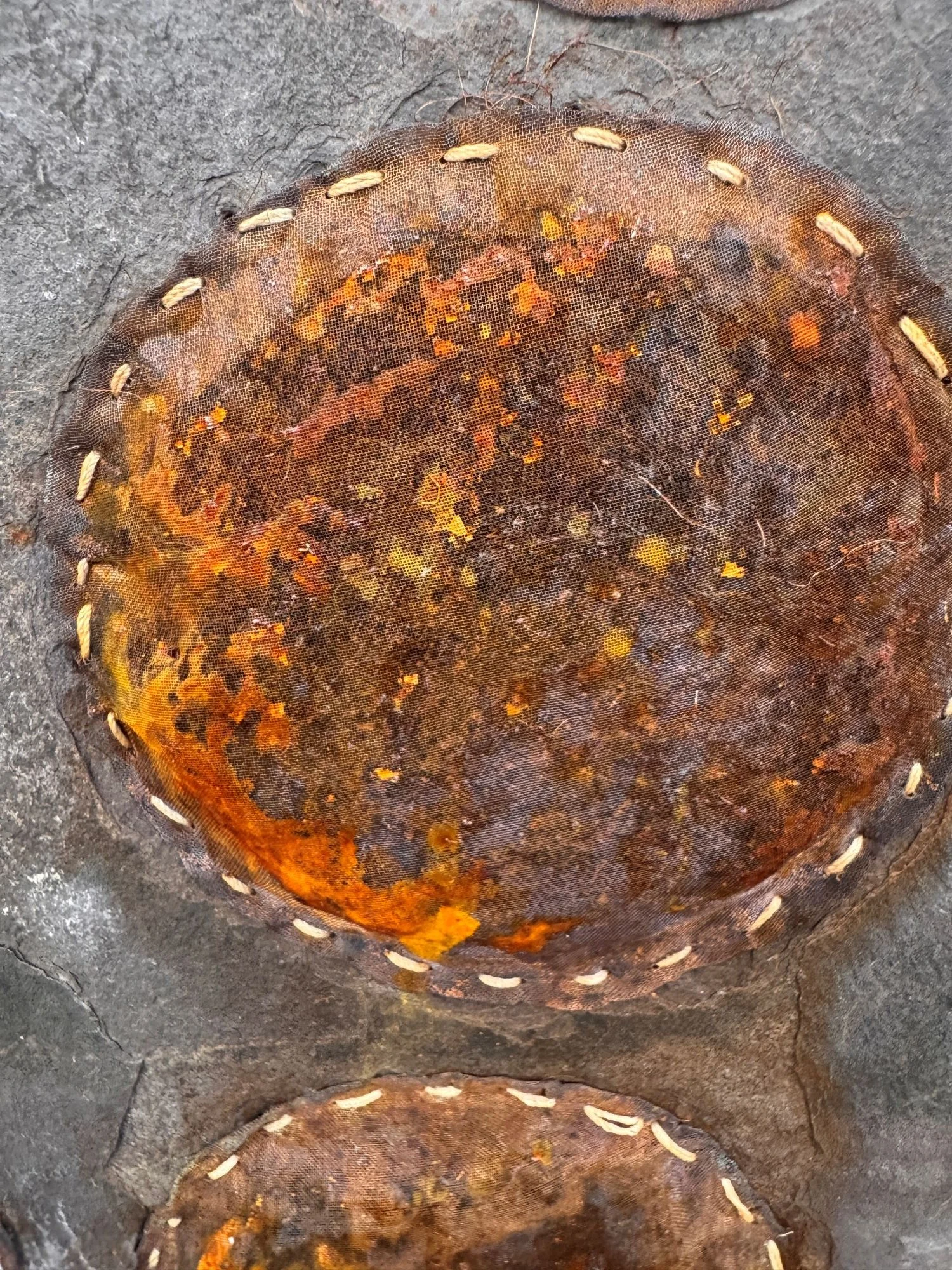
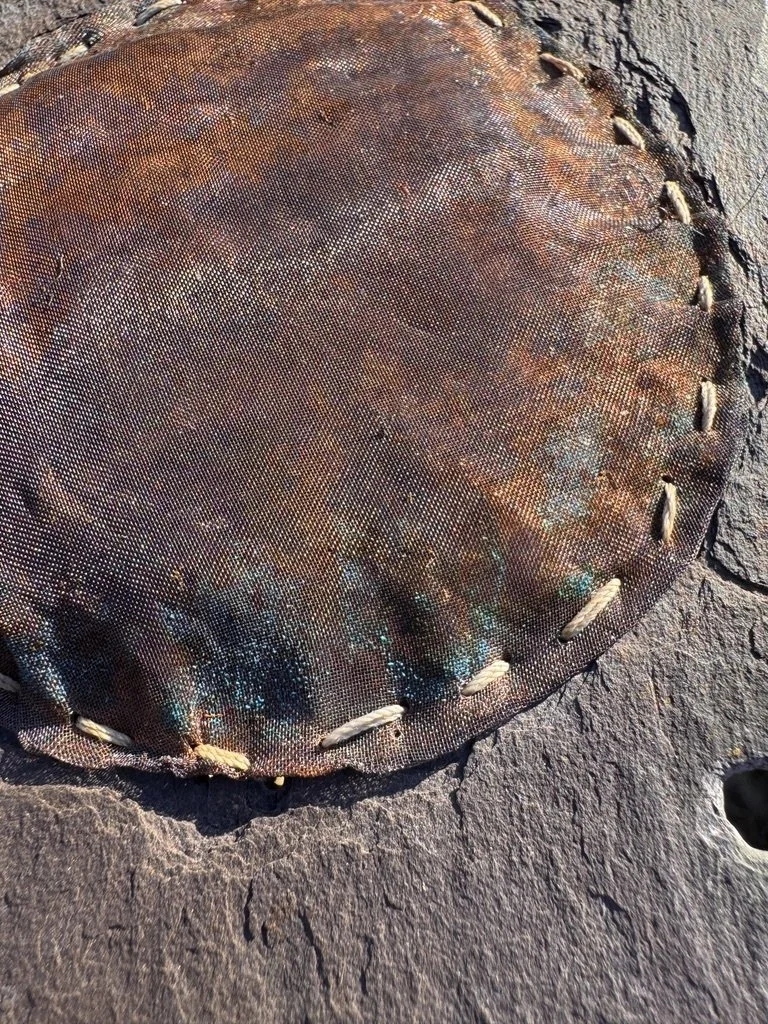
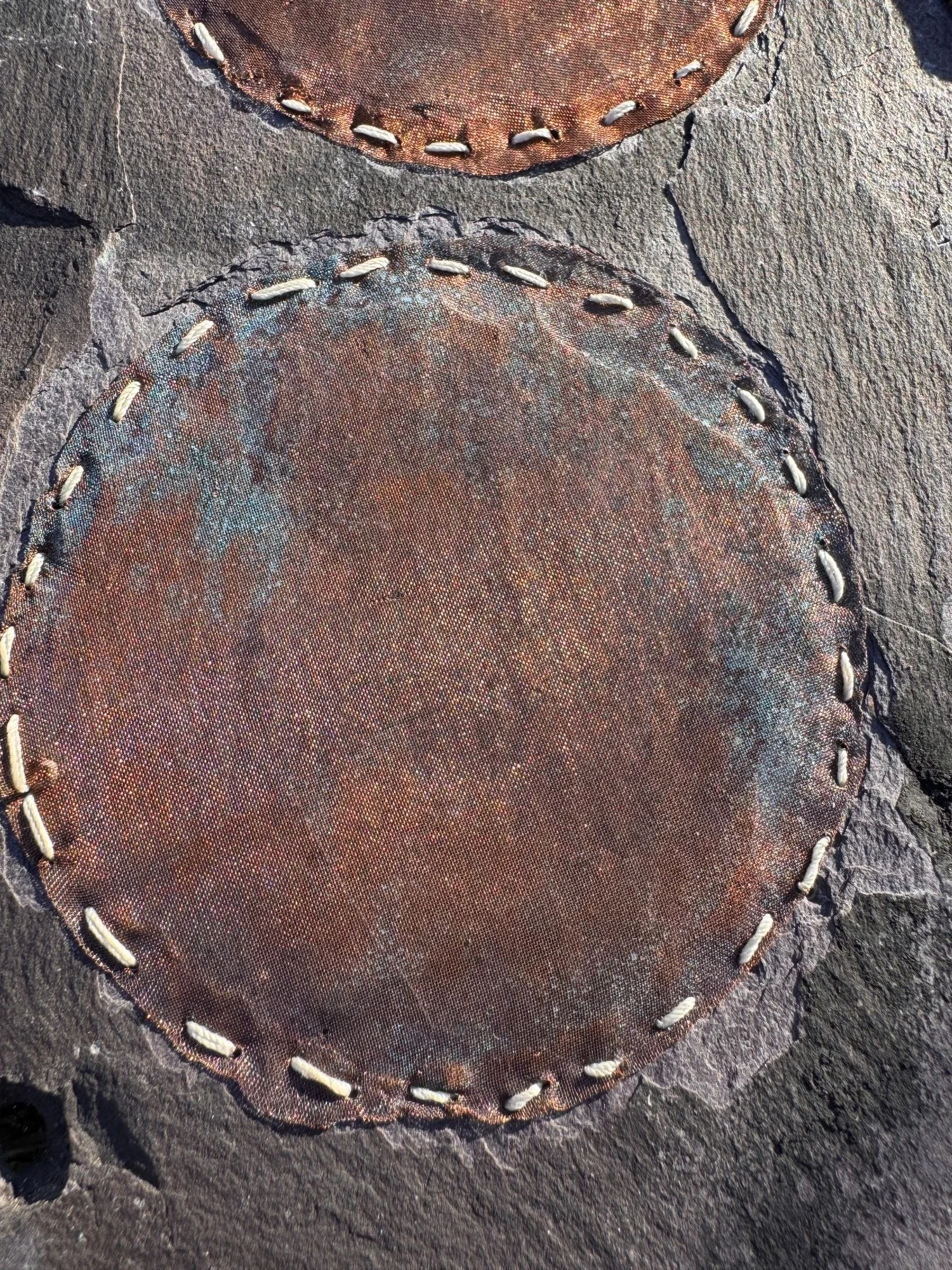
Copper is an incredible material. The range of patination it goes through changing over time and through chemical interaction. From its original warm pinks and browns, copper slowly shifts into greens and blues, shaped by oxidation and reactions with elements in the air. Using simple materials like vinegar or salt allows the process to be accelerated, but never fully controlled.
-
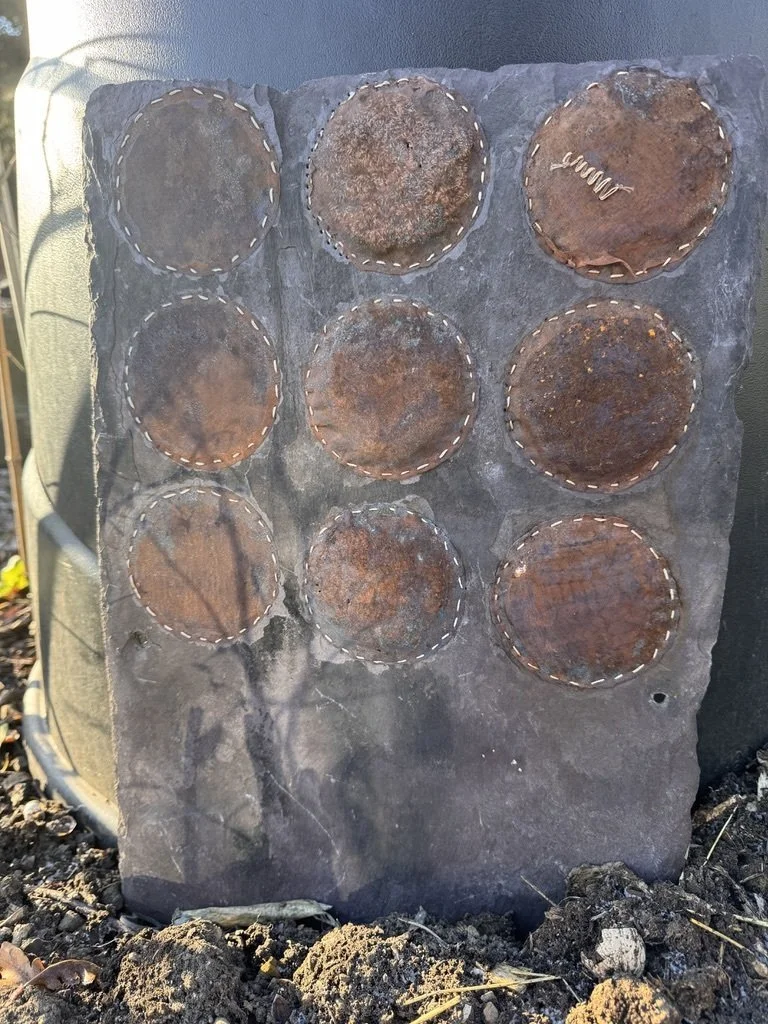
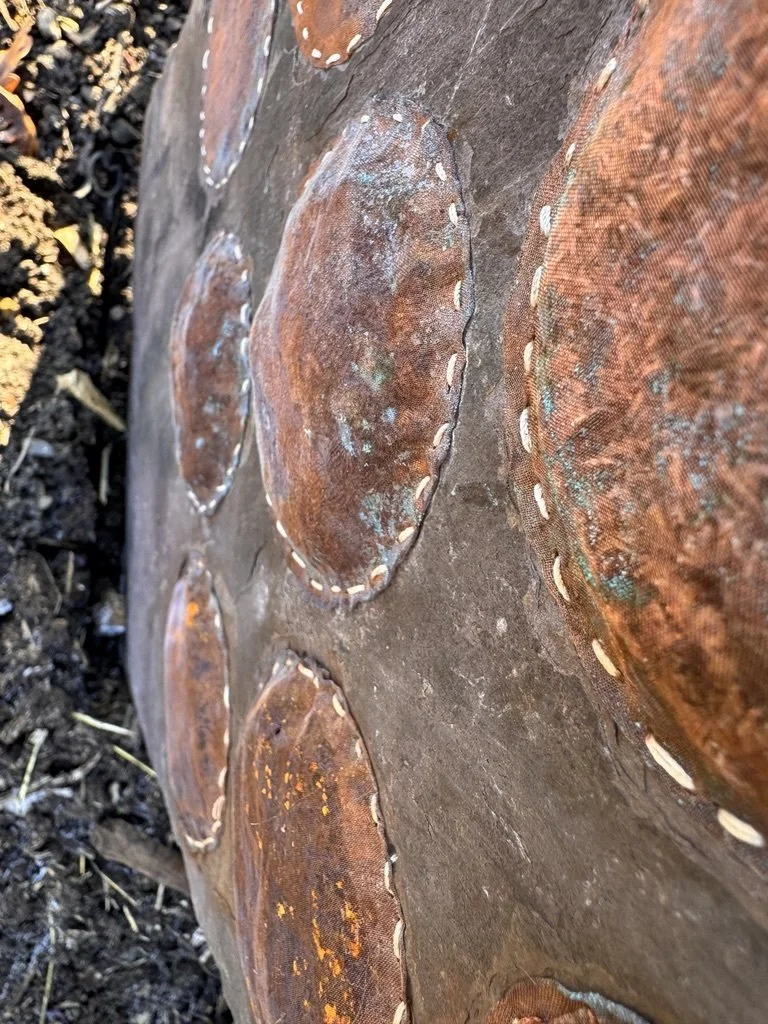
Copper patination has always held a particular beauty for me. When it sits against the greener tones of slate, the pairing feels grounded and balanced a conversation between weight and surface, solidity and change. It echoes my ongoing interest in contrast: heavy materials alongside delicate interventions, permanence alongside uncertainty.
This process also sits comfortably alongside other techniques I use, such as dyeing with frozen dye. In both cases, there is an understanding of the overall aesthetic you might achieve, but never the same final result. Beginning the patination with vinegar sets things in motion, but the nuances of colour and pattern emerge in their own time. Each piece becomes a record of that moment rather than a repeatable outcome.
There’s something quietly supportive about working this way. Like quilting slate with contrasting thread, the act of allowing variation of releasing complete control creates space to breathe. The process becomes less about forcing an outcome and more about responding to what appears. That shift has been important for me, not just materially, but mentally as well.
Using woven copper fabric allows me to treat slate as I would any other conventional quilting material. It expands the surface with an unexpected softness and introduces a wide spectrum of colour through the patination process. The copper doesn’t just sit on the slate; it changes with it, marking time, touch, and environment.
In that sense, copper patination isn’t just a surface treatment. It’s part of the same exploration I’ve been working through with weight and contrast, control and uncertainty, and how materials can quietly reflect the mental space in which they’re made.